TREN
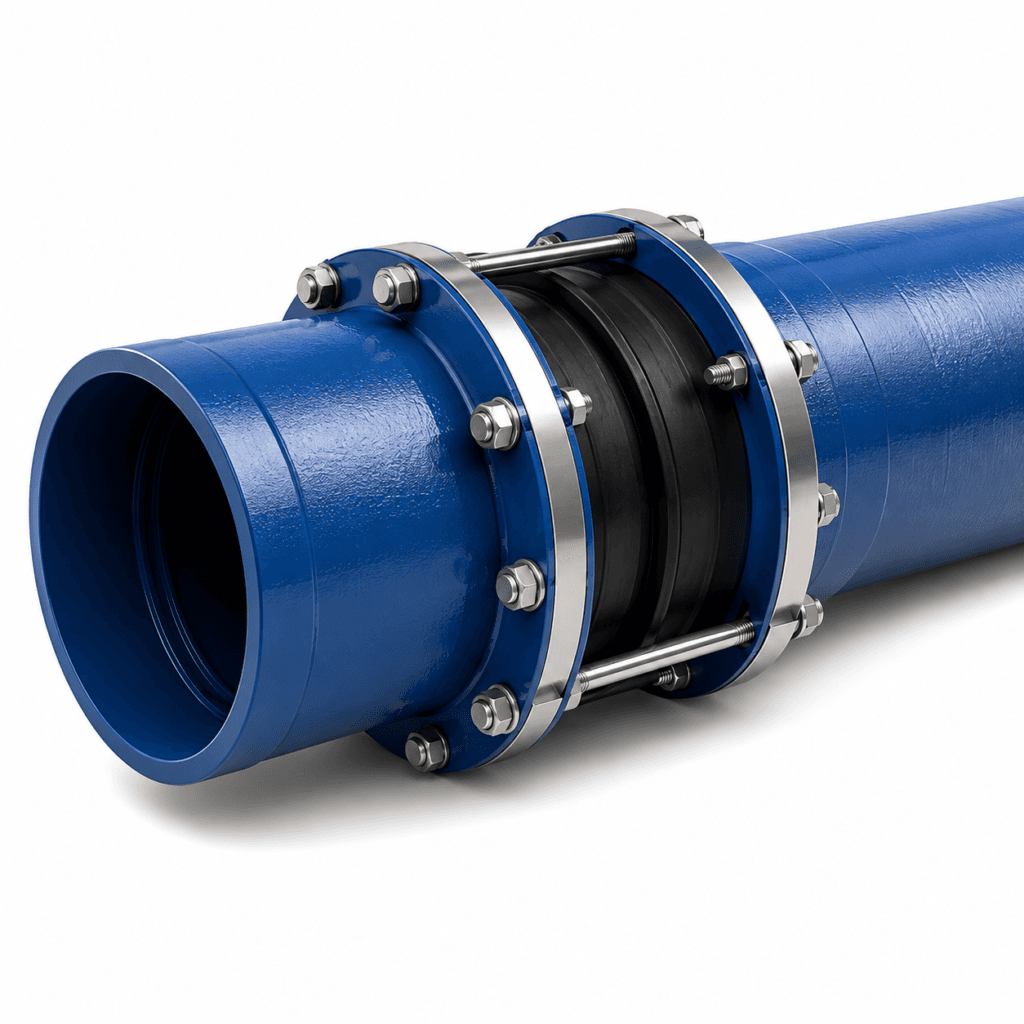
R.J. Pipe — Seismic-Resistant Restrained Joint Pipe
Product description
A restrained push-in ductile iron pipe system designed to prevent joint separation during ground movement, settlement, hydraulic loading and seismic activity.
Key features
- Restrained push-in joint
- Prevents pipe separation
- Distributes axial forces along the pipeline
- Allows controlled angular movement
- Allows controlled longitudinal movement
- Maintains sealing during displacement
- No conventional bolts or nuts required for the standard joint
- Fast assembly and disassembly
- High resistance to hydraulic forces
- Helps reduce water loss
- Suitable for unstable, weak or seismic ground conditions
Maximum angular deflection
- DN 80–300: 4°
- DN 350–700: 3°
Standards stated in the catalogue
- Seismic design: ISO 16134
- Functional testing: ISO 10804
- External coating: ISO 8179
- Internal lining: ISO 4179 and EN 598
- Pipe manufacture: ISO 2531
- Rubber sealing system associated with Tyton-type joints
R.J. Pipe locking-ring welding procedure
When a pipe is cut during installation or supplied without a welded locking ring, the catalogue provides the following welding specification:
- Welding process: Shielded Metal Arc Welding — SMAW
- Joint type: single weld
- Base metal: SG cast iron
- Material standard: EN-GJS400-15
- Base-metal thickness: 5–12 mm
- Electrode type: ENiFe-CI
- Electrode standard: ANSI/AWS A5.15
- Electrode diameter: 3.25 mm
- Current polarity: DCEP
- Welding current: 75–100 A
- Welding voltage: 22–24 V
- Welding position: horizontal
- Welding speed shown in the catalogue: 3–6 m/s
The welding values above are reproduced as stated in the supplied catalogue page.